Big Time
"I'm on my way I'm making it." For two decades, scale was the answer. This week, it started asking for its money back.

Hello friends. It’s Tuesday. I took yesterday off. Which means I’m rarin’ to go.
So it’s March Madness, which means America is once again learning its favorite annual lesson: being the biggest, most funded, most confident team in the bracket almost certainly means you’re going to lose to a buzzer beater.
Or ask Justin Fox and Nate Cavanaugh - the two DOGE idiots whose depositions went viral this week after it emerged they’d been cutting federal arts grants by asking ChatGPT if they seemed DEI-adjacent. Fox admitted under oath he couldn’t remember what was in the executive order he was supposedly enforcing. The videos went so viral a judge ordered them taken down. Then another judge said they could stay up.
Even the censorship couldn’t get its bracket right.
Scale was the strategy. This week, it’s the punchline. Welcome to this week’s episode of The Lens.
If it resonates with you - consider passing it along to a friend or colleague - or checking out my latest book Valuable Friction.
Zoom Lens: Scale Was the Strategy. Now It's the Problem.
In the 2011 film Margin Call, the always cool Jeremy Irons — playing the coldly elegant CEO of a failing investment bank — explains the only three ways to make a living in this business: “Be first, be smarter, or cheat.”
The movie then spends two hours demonstrating which one his firm chose.
I’ve been thinking about that line a lot this week, because it maps almost perfectly onto what’s happening across marketing, media, and tech right now. For two decades, the industry’s answer to “be first” and “be smarter” was a third option it never quite named: get so big that smart or first doesn’t matter. Big enough to absorb the mistakes. Big enough to outlast the disruption. Big enough that clients, partners, and platforms had no real alternative. Scale as strategy. Scale as moat. Scale, eventually, as a substitute for judgment.
In the 1980s it was Gordon Gekko in Wall Street saying “greed is good”.
In 2026 the mantra is slightly different. It’s “scale is good”.
But this week, several large things were announced, in various ways, that… well… as Inigo Montoya might say - “you keep using that word. I don’t think it means what you think it means.”
Let’s start with Madison Avenue. WPP - one of the largest advertising conglomerates on the planet - declared last month that it is “no longer a holding company.” It is now, just…. big. It’s four clean divisions with the least creative naming they could possibly think up. Omnicom is restructuring. Dentsu reported a loss. The whole holding company model, which was essentially a bet that owning more agencies was the same as being better at the work, is cracking under its own weight.
Over at OpenAI, Sam Altman has identified the problem and the solution. The problem: business customers now choose Anthropic at three times the rate of OpenAI - a fact that prompted a reported “code red” memo late last year. The solution: hire 4,000 more people. Double the workforce. Which is, when you sit with it for a moment, the most perfectly ironic interpretation of what’s going wrong. We are losing because we do not have enough employees. Sometimes the jokes write themselves, folks.
Meanwhile, Meta is doing its best impression of a zombie metaverse. Two days after confirming it was killing Horizon Worlds for VR - the centerpiece of a $10+ billion bet that the future of human connection was going to be Mark Zuckerberg’s avatar - Meta CTO Andrew Bosworth reversed course on an Instagram AMA. They’re keeping it alive for existing games. Yeah. That’s a sunk cost wearing a VR headset.
Oh, and CBS News Radio, which has been broadcasting since 1927, is shutting down on May 22nd. Officially: “challenging economic realities.” Unofficially: the new political realities of who is owning — and scaling — modern media companies. Nearly a century of Edward R. Murrow, gone. Dan Rather, now 94, said simply: “It’s another piece of America that is gone.”
And then there’s everything winning on the other end of the spectrum.
The Wall Street Journal this week profiled a new talent agency called Figures, representing what they’re calling the “alternatively influential” - people with actual expertise, small but intensely loyal audiences, and no algorithm-chasing whatsoever. Taste and judgment as currency, rather than follower count. Which would have sounded like a consolation prize in 2019. Today it’s a business model that agencies are building around. (PS> Still trying to figure out how to get my agency’s puff piece in the Journal. But I digress.)
But then check out Garage Beer - a craft brand that by every traditional metric should be invisible - is thriving by leaning into specific, weird, community-driven content. The kind that would die in three rounds of a holding company brand committee but works because actual humans made it for actual humans.
In Margin Call, remember, the three options were always “be first, be smarter, or cheat.” Scale allowed a whole generation of companies to avoid answering which one they were. Big enough to obscure the question. Now in 2026, we might finally be reaching a point where scale isn’t the savior it once was. And there’s no fourth option hiding behind it.
In today’s world, it’s pretty damn easy to appear like your “Big Time”. But the winners are becoming those that know exactly what they’re for. You’re either building something specific and true - and probably smaller than you originally thought - or you’re reorganizing the org chart and hoping nobody notices. The alternatively influential know exactly what they’re for. Garage Beer knows exactly what it’s for. Small, independent agencies - for better or worse - know what they’re for.
The rest are becoming, you know…. spectator sports, issuing very confident press releases that say something like… “We’re AI-First to unlock a synergistic ecosystem, and will hyper-scale our disruptive framework to remain agile enough to capture market share while maintaining escape velocity scale.”
Ick.
WIDE ANGLE LENS
Let’s Zoom out and check out what interesting things are catching my eye in marketing and advertising this week.
Ad Age — Creator & Influencer Trends
Brands are getting creative with influencer partnerships — Harry’s, Credit One, and Booking.com all leaning into character-driven, serialized content rather than one-off sponsored posts. Which is... exactly what I’ve been saying for years. Nice of the industry to catch up. The shift from “here’s a person with followers” to “here’s an actual story” is quiet but real.
HBR — When Senior Leaders Lack People Skills, Transformations Fail
McKinsey says 70% of transformations fail. The culprit is rarely the strategy - it’s leaders who mistake silence for agreement and confuse a reorganized org chart with actual change. Filed alongside this week’s Zoom Lens under: things that are obvious in retrospect and ignored in the moment. Turns out people skills aren’t soft. They’re structural.
Squared Away Life — AI Can Make You Faster, But It Can’t Replace Human Judgment
Full disclosure: this is me. Camden Bucey invited me on his podcast to talk about Valuable Friction - specifically why the obsession with speed and efficiency is producing a world of indistinguishable sameness. It pairs suspiciously well with everything else in this edition. Make of that what you will.
LENS FLARE
What I’m reading right now
📚Mattering: The Secret to a Life of Deep Connection and Purpose — Jennifer Breheny Wallace
Wallace's instant NYT bestseller makes a deceptively simple argument: the deepest human need isn't happiness or success - it's mattering to someone (Good lord do I identify with that). In a world where brands are desperately trying to scale connection and institutions are forgetting what they're for, this one hits differently. Less self-help, more urgent diagnosis. Totally worth your time.
🍷 Lens Cap - The Finishing Notes…
So, what did we learn this week?
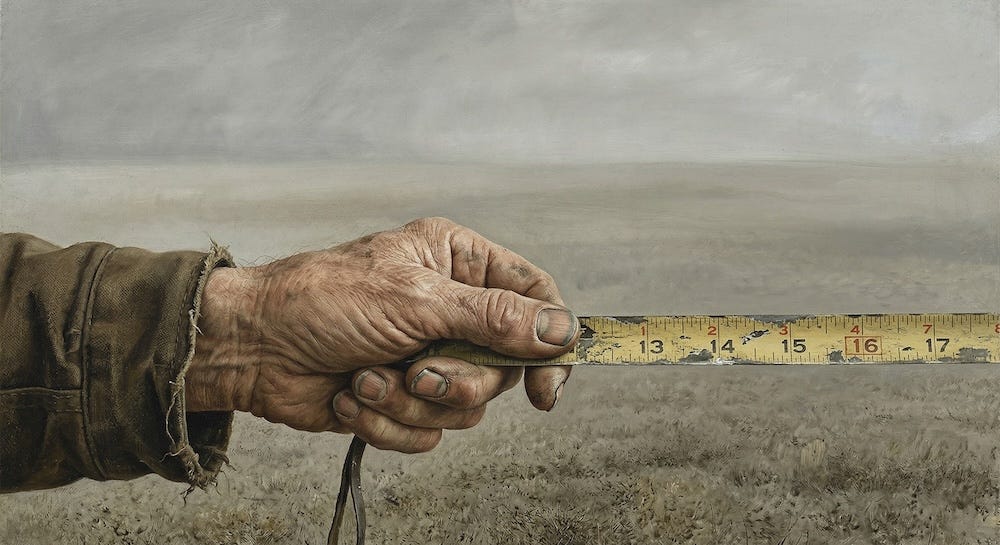
There’s an old carpentry rule: measure twice, cut once. The wisdom isn’t really about measurement. It’s about the cost of being wrong at scale. One bad cut on a small piece of wood is a minor annoyance. One bad cut on the whole floor is a catastrophe.
We built an industry - really, an entire era of business - on the assumption that scale was the answer before we’d fully answered the question. More reach before we understood what we were reaching people for. More employees before we understood what the work actually was. More agencies, more platforms, more ambition, more metaverse. We cut a lot of floors before we measured.
What this week keeps whispering - through the holding company reshuffles, the viral deposition videos, the zombie VR headset, the craft beer brand quietly thriving in the corner - is that the era of scale-as-substitute-for-judgment may be winding down. Not with a crash. More like a slow exhale.
The good news - and there genuinely is good news here - is that what replaces it is something most of us got into this work to do in the first place. Make things that matter to specific people. Say something true. Build something small enough to actually hold up under scrutiny.
CBS News Radio went dark this week after 99 years. Dan Rather called it “another piece of America that is gone.” He’s right. But the reason it’s gone isn’t because no one wanted good journalism. It’s because the institution forgot what it was for and couldn’t find its way back.
That’s the real cautionary tale. Not size. Forgetting.
The antidote - now as always - is conviction. Know what you’re for. Do that thing with everything you have. Measure twice.